
Welcome to the QosequTM website
Your online source of information about QosequTM (denosumab) and osteoporosis.
Find answers here to frequently asked questions about QosequTM and explore different ways of supporting your bone health.

Treatment Frequency
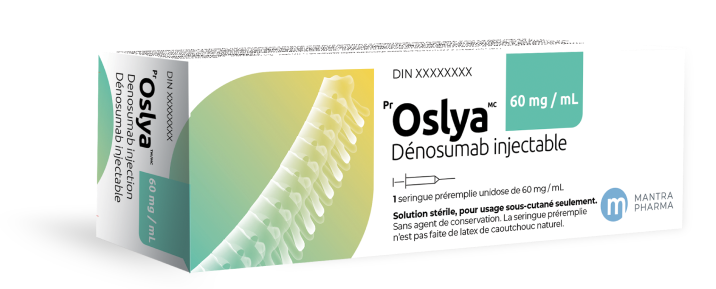
60 mg subcutaneous injection
QosequTM est administré en une seule injection sous la peau (sous-cutanée) tous les 6 mois. L’injection peut se faire dans le haut du bras, le haut de la cuisse ou l’abdomen. Elle peut être administrée en tout temps, avec ou sans aliments, par un professionnel de la santé ou une personne formée pour donner des injections. Si un professionnel de la santé l’estime approprié, un patient peut également se faire lui-même les injections.
Please clic here to view the QosequTM self-injection instructions for patients and watch the self-injection video above.
INDICATIONS
Indications have been granted on the basis of similarity between QosequTM and the reference biologic drug PROLIA®.
QosequTM (denosumab injection) is indicated for:
Postmenopausal Osteoporosis
For the treatment of postmenopausal women with osteoporosis at high risk for fracture, defined as a history of osteoporotic fracture, or multiple risk factors for fracture; or patients who have failed or are intolerant to other available osteoporosis therapy. In postmenopausal women with osteoporosis, QosequTM reduces the incidence of vertebral, nonvertebral and hip fractures.
Treatment to Increase Bone Mass in Men with Osteoporosis at High Risk for Fracture
As a treatment to increase bone mass in men with osteoporosis at high risk for fracture, defined as a history of osteoporotic fracture, or multiple risk factors for fracture; or patients who have failed or are intolerant to other available osteoporosis therapy.
Treatment to Increase Bone Mass in Men with Nonmetastatic Prostate Cancer receiving Androgen Deprivation Therapy (ADT), who are at high risk for fracture
As a treatment to increase bone mass in men with nonmetastatic prostate cancer receiving androgen deprivation therapy (ADT), who are at high risk for fracture.
Treatment to Increase Bone Mass in Women Receiving Adjuvant Aromatase Inhibitor Therapy for Nonmetastatic Breast Cancer
As a treatment to increase bone mass in women with nonmetastatic breast cancer receiving adjuvant aromatase inhibitor (AI) therapy, who have low bone mass and are at high risk for fracture.
Treatment to Increase Bone Mass for the Treatment and Prevention of Glucocorticoid-Induced Osteoporosis in Women and Men at High Risk for Fracture
- As a treatment to increase bone mass in women and men at high risk for fracture due to sustained systemic glucocorticoid therapy.
- As a treatment to increase bone mass in women and men at high risk for fracture who are starting or have recently started long term glucocorticoid therapy.
Contraindications
- QosequTM is contraindicated in patients who are hypersensitive to this drug or to any ingredient in the formulation, including any non-medicinal ingredient, or component of the container. Anaphylactic reactions have been reported.
- Hypocalcemia
- Female patients who are pregnant or who are trying to become pregnant. QosequTM may cause fetal harm when administered to a pregnant woman. In women of reproductive potential, pregnancy testing should be performed prior to initiating treatment with QosequTM. In utero denosumab exposure in cynomolgus monkeys resulted in increased fetal loss, stillbirths, and postnatal mortality, along with evidence of absent lymph nodes, abnormal bone growth and decreased neonatal growth. If this drug is used during pregnancy, or if the patient becomes pregnant while taking this drug, the patient should be apprised of the potential hazard to a fetus.
Warnings and precautions
General
Adequate intake of calcium and vitamin D is important in all patients. Patients being treated with QosequTM should not be treated concomitantly with other denosumab-containing drug products.
Endocrine and Metabolism
Hypercalcemia in Pediatric Patients with Osteogenesis Imperfecta
QosequTM is not indicated for use in pediatric patients.
In clinical trials, hypercalcemia has been reported in pediatric patients with osteogenesis imperfecta treated with denosumab. Some cases required hospitalization.
Hypocalcemia
Hypocalcemia must be corrected by adequate intake of calcium and vitamin D prior to initiating therapy with QosequTM. Other disorders affecting mineral metabolism (such as vitamin D deficiency) should be treated.
Clinical monitoring of calcium levels is recommended before each dose and, in patients predisposed to hypocalcemia, within two weeks after the initial dose.
Patients are advised to report to their physicians any symptoms of hypocalcemia, such as paresthesias or muscle spasms, twitching and muscle cramps. Calcium levels should be measured if any patient presents with suspected symptoms of hypocalcemia during treatment.
In the post-market setting, severe symptomatic hypocalcemia (resulting in hospitalization, life-threatening events, and fatal cases) has been reported, particularly in patients with severe renal impairment receiving dialysis or treatment with other calcium lowering drugs. While most cases occurred in the first weeks of initiating therapy, it can also occur later. Examples of the clinical manifestations of severe symptomatic hypocalcemia have included QT interval prolongation, tetany, convulsions and altered mental status.
Hepatic Impairment
The safety and efficacy of denosumab have not been studied in patients with hepatic impairment.
Hypersensitivity
Clinically significant hypersensitivity reactions, including anaphylaxis, have been reported with denosumab. Symptoms have included hypotension, dyspnea, throat tightness, facial and upper airway edema, pruritus, and urticaria.
If an anaphylactic or other clinically significant allergic reaction occurs, initiate appropriate treatment immediately and discontinue further use of QosequTM.
Infections
In a 3-year clinical trial in women with postmenopausal osteoporosis, serious infections leading to hospitalization were reported more frequently in the denosumab group (4.1%) than in the placebo group (3.4%). Skin infections leading to hospitalization were reported more frequently in the denosumab (0.4%) versus the placebo (< 0.1%) groups. These cases were predominantly cellulitis. As well, infections of the abdomen, urinary tract, and ear, were more frequent in patients treated with denosumab. Endocarditis was also reported more frequently in denosumab-treated patients (< 0.1% denosumab group; 0% placebo group). The incidence of opportunistic infections was balanced between denosumab and placebo groups and the overall incidence of skin infections was similar between the denosumab (1.5%) and placebo (1.2%) groups. Patients should be advised to seek prompt medical attention if they develop signs or symptoms of severe infection, including cellulitis and erysipelas.
Patients on concomitant immunosuppressant agents (e.g., glucocorticoids) or with impaired immune systems may be at increased risk for serious infections. Limited information is available on the safety of denosumab treatment in patients with glucocorticoid-induced osteoporosis who have a clinically important active infection, or a history of recurrent or chronic infections. Consider the benefit-risk profile in such patients before treating with QosequTM. In patients who develop serious infections while on QosequTM, prescribers should assess the need for continued QosequTM therapy.
Monitoring and Laboratory Tests
Clinical monitoring of calcium is recommended before each dose. In patients with a history of hypocalcemia, or signs and symptoms of hypocalcemia or predisposed to hypocalcemia (e.g., history of hypoparathyroidism, thyroid surgery, parathyroid surgery, malabsorption syndromes, excision of small intestine, severe renal impairment [creatinine clearance < 30 mL/min] or receiving dialysis, or treatment with other calcium lowering drugs), clinical monitoring of calcium levels is recommended within the first 2 weeks of the initial dose. Calcium levels should be measured if any patient presents with suspected symptoms of hypocalcemia during treatment.
Osteonecrosis of the Jaw (ONJ)
Osteonecrosis of the jaw (ONJ) has been reported in patients treated with denosumab or bisphosphonates, another class of anti-resorptive agents. Most cases have been in cancer patients; however, some have occurred in patients with osteoporosis. The risk of ONJ may increase with duration of exposure to denosumab. ONJ has been reported in clinical studies in patients receiving denosumab at a dose of 60 mg every 6 months for osteoporosis. There have been reports of ONJ in clinical studies in patients with advanced cancer treated with denosumab at the studied dose of 120 mg administered every 4 weeks.
Known risk factors for ONJ include previous treatment with bisphosphonates, older age, smoking, a diagnosis of cancer, concomitant therapies (e.g., chemotherapy, antiangiogenic biologics, corticosteroids, radiotherapy to head and neck), poor oral hygiene, invasive dental procedures (e.g., dental extractions, dental implants, oral surgery), and co-morbid disorders (e.g., periodontal and/or other pre-existing dental disease, ill-fitting dentures, anemia, coagulopathy, infection).
It is important to evaluate patients for risk factors for ONJ before starting treatment. A dental examination with appropriate preventative dentistry is recommended prior to treatment with QosequTM in patients with risk factors for ONJ.
Good oral hygiene practices should be maintained during treatment with QosequTM. Patients should receive routine dental check-ups, and immediately report any oral symptoms such as dental mobility, pain or swelling during treatment with QosequTM.
Avoid invasive dental procedures during treatment with QosequTM. For patients in whom invasive dental procedures cannot be avoided, the
clinical judgment of the treating physician should guide the management plan of each patient based on individual benefit-risk assessment.
Patients who are suspected of having ONJ or patients who develop ONJ during treatment with QosequTM should receive care by a dentist or an oral surgeon. In patients who develop ONJ during treatment with QosequTM, a temporary interruption of treatment should be considered based on individual benefit-risk assessment until the condition resolves.
Atypical Femoral Fractures
Atypical femoral fractures have been reported in patients receiving denosumab. Atypical femoral fractures may occur with little or no trauma in the subtrochanteric and diaphyseal regions of the femur and may be bilateral. Specific radiographic findings characterize these events. Atypical femoral fractures have also been reported in patients with certain comorbid conditions (e.g., vitamin D deficiency, rheumatoid arthritis, hypophosphatasia) and with use of certain pharmaceutical agents (e.g., bisphosphonates, glucocorticoids, proton pump inhibitors). These events have also occurred without antiresorptive therapy. During QosequTM treatment, patients should be advised to report new or unusual thigh, hip, or groin pain. Patients presenting with such symptoms should be evaluated for an incomplete femoral fracture, and the contralateral femur should also be examined.
Multiple Vertebral Fractures (MVF) Following Discontinuation of QosequTM Treatment
Multiple vertebral fractures (MVF) may occur following discontinuation of treatment with QosequTM, particularly in patients with a history of vertebral fracture.
Advise patients not to interrupt QosequTM therapy without their physician’s advice. Evaluate the individual benefit-risk before discontinuing treatment with QosequTM. If QosequTM treatment is discontinued, consider transitioning to an alternative antiresorptive therapy.
Suppression of Bone Turnover
In clinical trials in women with postmenopausal osteoporosis, treatment with denosumab resulted in significant suppression of bone remodeling as evidenced by markers of bone turnover and bone histomorphometry. The significance of these findings and the effect of long-term treatment with denosumab are unknown. Monitor patients for osteonecrosis of the jaw, atypical fractures, and delayed fracture healing.
Malignancies
See 8 ADVERSE REACTIONS, 8.2 Clinical Trial Adverse Reactions.
Renal Impairment
In a study of 55 patients with varying degrees of renal function, including patients on dialysis, the degree of renal impairment had no effect on the pharmacokinetics of denosumab; thus, dose adjustment for renal impairment is not necessary.
In clinical studies, patients with severe renal impairment (creatinine clearance < 30 mL/min), or receiving dialysis, were at greater risk of developing hypocalcemia. Adequate intake of calcium and vitamin D is important in patients with severe renal impairment or receiving dialysis.
Skin
In a large, 3-year clinical trial of over 7800 women with postmenopausal osteoporosis, epidermal and dermal adverse events such as dermatitis, eczema, and rashes, occurred at a significantly higher rate in the denosumab (10.8%) group compared to the placebo (8.2%) group. Most of these events were not specific to the injection site. Consider discontinuing QosequTM if severe symptoms develop.
FOR MORE INFORMATION
To learn more about adverse effects, drug interactions, or dosage, consult the QosequTM product monograph by clicking here, or contact the Medical Information Service at Mantra Pharma Inc. at 1-833-248-7326

The MantrAssistanceTM* Support Program
by Mantra Pharma
Sign up now for the MantrAssistanceTM support program to receive QosequMC injection reminders from a nurse.
MantrAssistanceTM is our platform that integrates all patient support services.