Comparative Clinical Trials1
Clinical studies conducted to support similarity between QosequTM and the reference biologic drug included:
Phase 3 Study no. 0774-19
A comparative pharmacokinetic (PK), pharmacodynamic (PD), efficacy, safety and immunogenicity study comparing QosequTM and EU-PROLIA in women with postmenopausal osteoporosis (PMO).
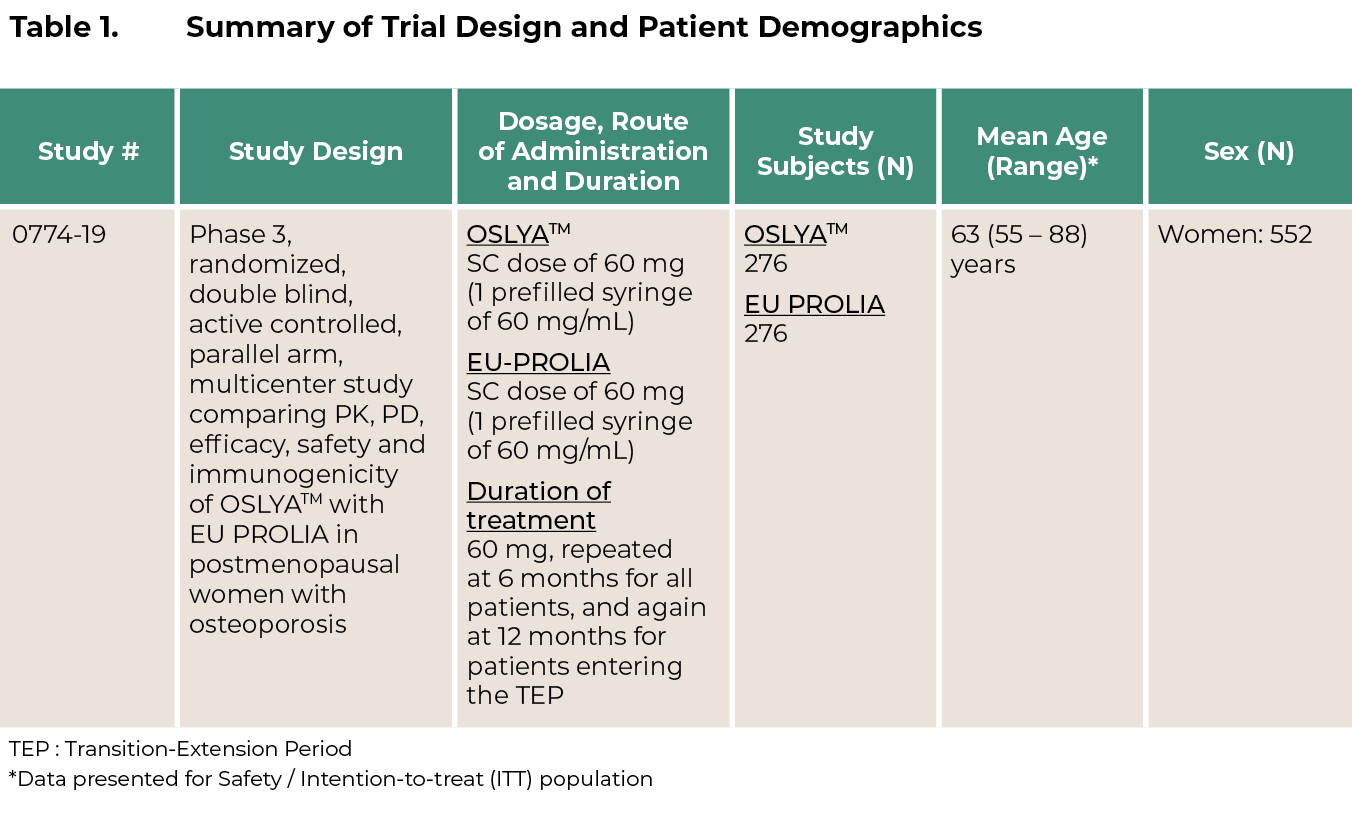
An overview of the study no. 0774-19 design and demographic characteristics of patients enrolled in the clinical study is presented in Table 1.
Comparative Bioavailability Studies1
PHARMACOKINETICS
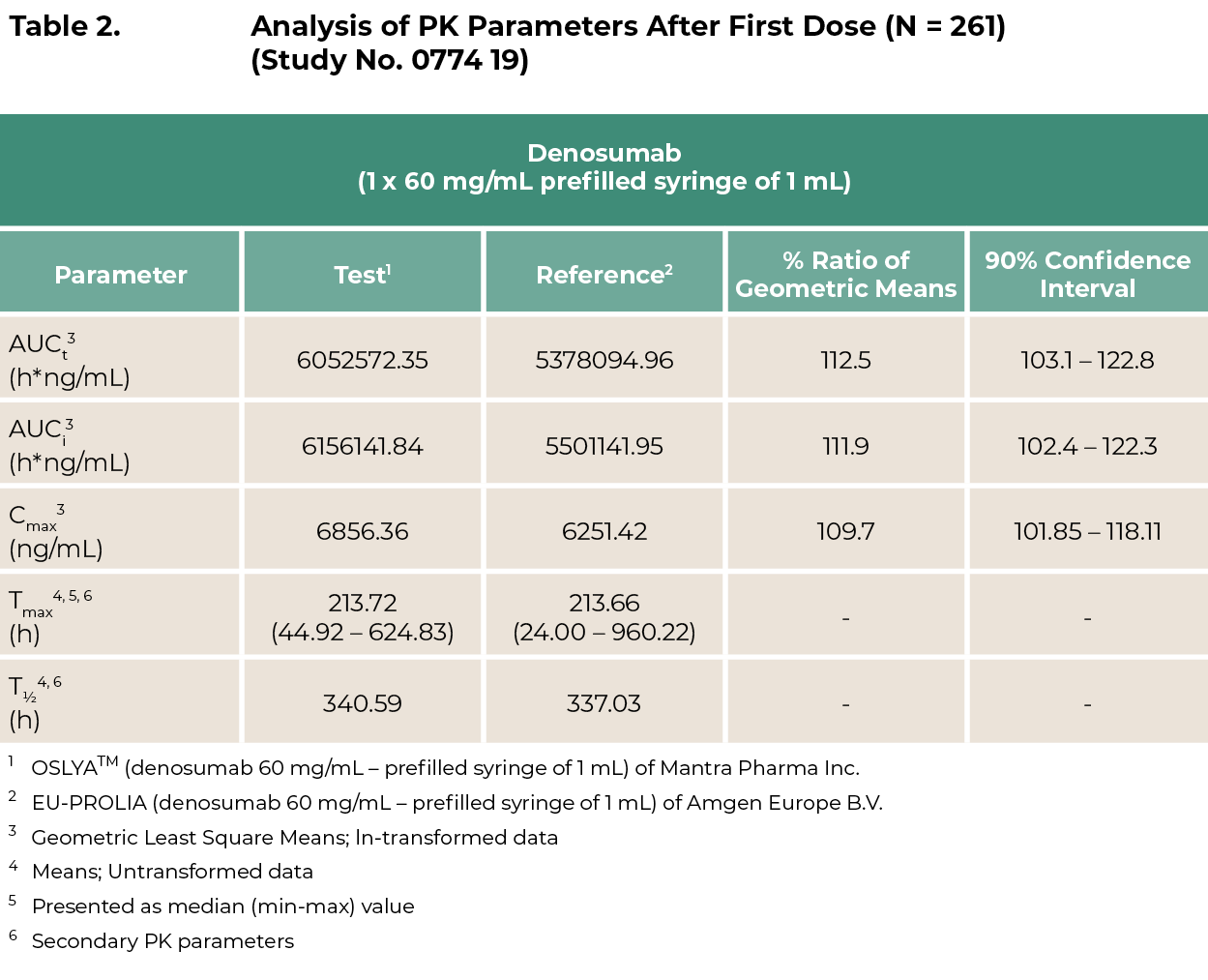
Study no. 077419 compared PK of pharmacokinetic de QosequTM (Mantra Pharma Inc.) to that of EU-PROLIA (Amgen Europe B.V.) after 1 dose. The study demonstrated that the 90% Confidence Intervals (CI) for the test-to-reference ratios for AUCt, AUCi and Cmax (primary PK parameters) were within the pre-specified criteria for pharmacokinetic similarity of 80% to 125%. Table 2 identifies the results of the PK parameters.
PHARMACODYNAMICS
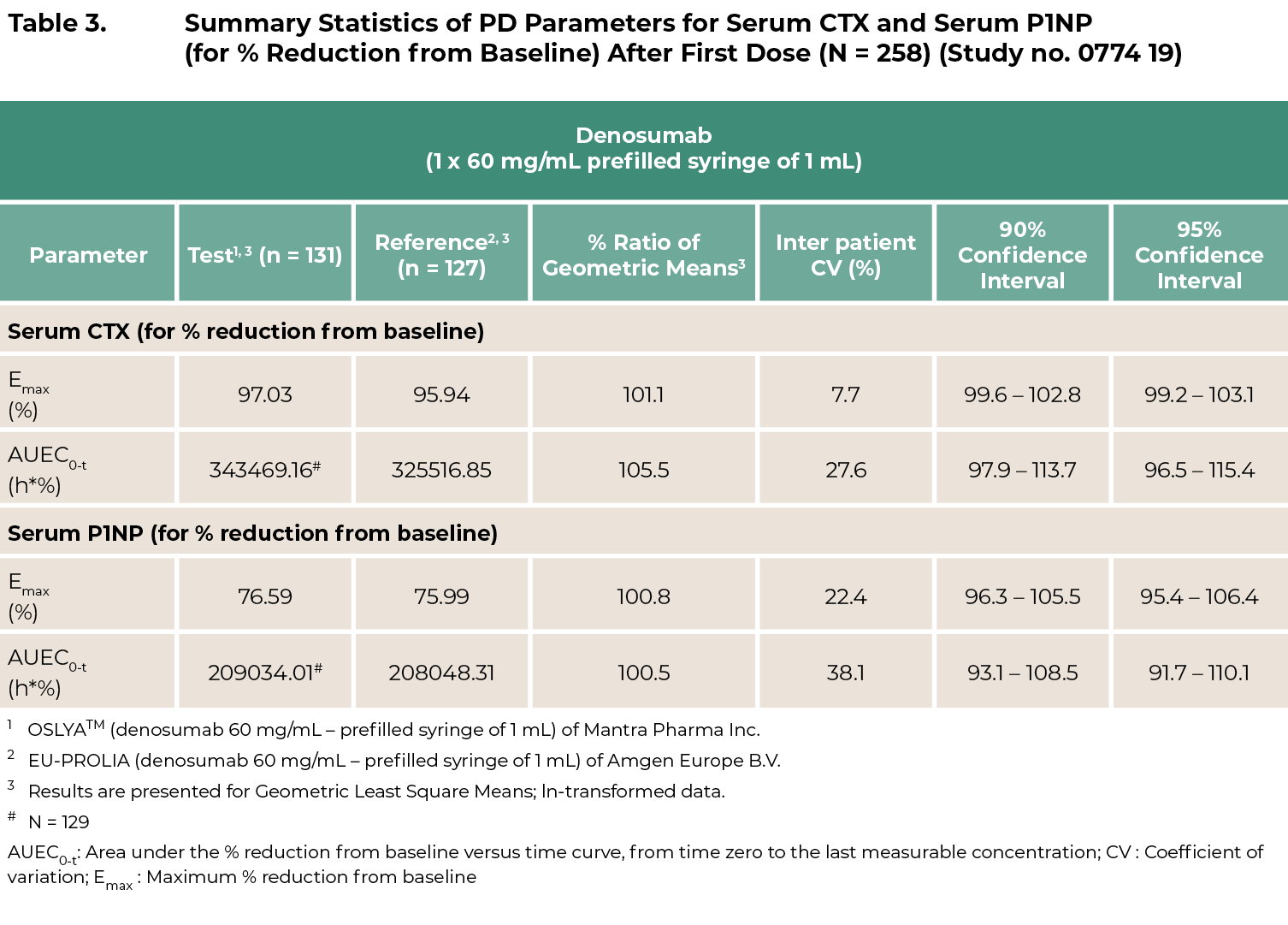
PD parameters were calculated by measuring serum C-telopeptide (CTX) and serum procollagen type 1 N-terminal propeptide (P1NP), using an electroluminescence immunoassay-based method.
PD parameters for serum CTX (for % reduction from baseline) and serum P1NP (for % reduction from baseline) after the first dose of QosequTM were compared to that of EU-PROLIA in Study no. 077419. The results are summarized in Table 3.
After the first dose of QosequTM or EU-PROLIA, serum CTX (% reduction from baseline) and serum P1NP (% reduction from baseline) were estimated, and Emax and AUEC0-t, were found to be comparable, with 90% and 95% confidence intervals within the acceptance criteria of 80 % to 125 %.
EFFICACY1
Comparability of efficacy between QosequTM and EU-PROLIA was explored in a population of post-menopausal women with osteoporosis in Study no. 077419.
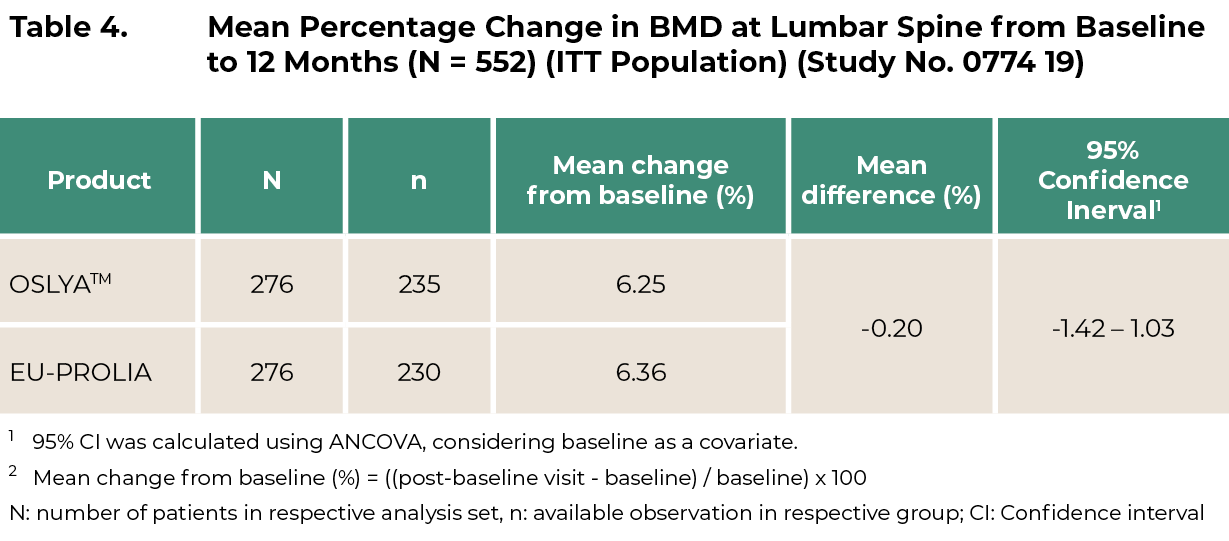
The primary efficacy endpoint for the study was mean percentage change in bone mineral density (BMD) of lumbar spine, from baseline to 12 months, between QosequTM and EU‑PROLIA.
The study met its primary efficacy endpoint since the 95% CI of the difference between QosequTM and EUPROLIA for mean percentage change in BMD at lumbar spine from baseline to 12 months was within the range of [-1.45 – 1.45] (on intent-to-treat (ITT) population).
Results of the primary efficacy endpoint are presented in Table 4.